Nicolas Sarkozy abruptly ended a '60 Minutes' interview aimed at introducing him to the United States. He refused to answer questions about his wife. Two weeks later his divorce was announced.
Antonie van Campen
Tuesday, October 30, 2007
Sarkozy walks out of US TV interview

Monday, October 29, 2007
'Lisbon treaty made to avoid referendum'
 Former French president Valerie Giscard d'Estaing, architect of the rejected constitution, published an open letter in Le Monde and some other European newspapers saying that the new Lisbon treaty alienates the citizens further.
'The EU's new treaty is the same as the rejected constitution, only the format has been changed to avoid referendums,' he said. The former chairman of the European Convention explained that it is thanks to the facts that the articles are spread out and constitutional vocabulary has been removed a referendums is being avoid.
His words are, according to the EUobserver, likely to fuel the calls for referendums in the UK and Denmark where the governments are arguing that there is no need for a public poll on the Lisbon treaty because it is sufficiently different from the EU constitution.
-Antonie van Campen-
Monday, October 22, 2007
Kick out the black sheep!
 Free speech is needed if a democratic system is to function well. But should it be upheld when it is used to encourage racism, sexism, etc?
The Swiss People’s Party (SVP) in Switzerland has stretched the limits of politically correct statements to gain more votes.
You can go on the SVP website (only in German and French) to play several games: "kick the immigrants out", "shoot at the EU", etc.
Despite the use of controversial campaign tactics, this nationalist party received the highest vote ever recorded for an individual political party in Switzerland on Sunday. This will mean that the country is very likely to adopt a tougher stance towards immigration and the European Union.
Going against the treaty signed between Switzerland and the EU, the SVP is expected to veto against open borders for workers from Bulgaria and Romania, the newest members of the Union. Also, the SVP wants to "uphold Switzerland’s right to set competitive rates of corporate taxation in the face of claims by the European Commission that the Swiss system represents unfair competition," as the Financial Times reports.
Gaëlle Engelberts
Friday, October 19, 2007
Mandelson calls for EU to align with US over Chinese "juggernaut"
 European trade commissioner, Peter Mandelson, has called for a more aggressive stance against Beijing, after conceding that the European Union has been unsuccessful in securing concessions over the widening trade gap with China.
In a document addressed to the European Commission president, Jose Manuel Barroso, Mandelson has said that China has "failed to respond to a policy of co-operation and dialogue."
In his four-page letter, he severely criticises Beijing, arguing that, “to some extent the Chinese juggernaut is out of control” and that the “European Union is sitting on a time bomb.”
Mandelson has also said that the European Union should align trade policy closer to the US and take more cases against the Chinese to the World Trade Organisation. Since 2001 the EU has only taken one case to the WTO, whereas the US has taken six.
The EU trade deficit with China rose by 20 percent last year and is now at a higher rate than the United States, according to the European Commission.
China is Europe’s largest supplier of manufactured goods, but the EU exports more to Switzerland than it does to China. It has been estimated that regulatory discrimination and non-tariff barriers currently cost European companies 20 billion Euros per year.
His comments come after calls from French president, Nicolas Sarkozy and German chancellor, Angela Merkel, for a tougher stance against emerging Asian economies over trade.
The European Commission is near to making decisions on a number of trade disputes, over commodities such as steel that could lead to confrontations between the EU and China. Concerns are increasing about the high levels of Chinese imports and the effect on European jobs.
- Mark Bentley
Thursday, October 18, 2007
Negotiations on the Reform Treaty

Europe is holding its breath at the negotiations on the new Reform Treaty. In the EU summit that started today in Lisbon the 27 leaders of the member states are hoping to come to a compromise.
Poland and Britain are the biggest "trouble makers". Poland is strict on its demand to get the Ioannina mechanism written into the treaty. The mechanism would allow any member country to block an EU decision for a period of up to two years.
Britain is defending its opt-outs from areas of taxation, foreign policy, justice, security and others.
Italy, which fought for keeping a larger number of seats in the European Parliament, is ready to compromise.
Watch a video summary of the current developements of the negotiation in the www.euronews.net page.
- Jurga Krastinaityte
Poland and Britain are the biggest "trouble makers". Poland is strict on its demand to get the Ioannina mechanism written into the treaty. The mechanism would allow any member country to block an EU decision for a period of up to two years.
Britain is defending its opt-outs from areas of taxation, foreign policy, justice, security and others.
Italy, which fought for keeping a larger number of seats in the European Parliament, is ready to compromise.
Watch a video summary of the current developements of the negotiation in the www.euronews.net page.
- Jurga Krastinaityte
Wednesday, October 17, 2007
First Step Towards Montenegro's EU Membership

The EU and Montenegro signed the Stabilisation and Association Agreement (SAA). The document opened up the trade between EU and the youngest European country and is seen as a step towards its greater European integration.
Montenegro hopes to officially apply for EU membership next year, reports the EUobserver.com. Before joining the EU, the country of only 65o,ooo inhabitants has to go through significant reforms of its public administration, judicial system and to perform better on fight against corruption. Therefore Montenegro is not likely to join in the near future. However, the country is relying much on the Slovenian EU presidency in the first half of 2008.
The process of Montenegrin European integration was sped up by its independence from Serbia in May 2006. Take a look at the BBC's profile of Montenegro.
What do you think about the new agreement? Do you believe Montenegro will become a member in the coming decade? Should it be admitted? Do you agree that Montenegro seems to be better off without Serbia? Having in mind our discussion in European History class, how can their case be compared to Kosovo?
- Jurga Krastinaityte
Montenegro hopes to officially apply for EU membership next year, reports the EUobserver.com. Before joining the EU, the country of only 65o,ooo inhabitants has to go through significant reforms of its public administration, judicial system and to perform better on fight against corruption. Therefore Montenegro is not likely to join in the near future. However, the country is relying much on the Slovenian EU presidency in the first half of 2008.
The process of Montenegrin European integration was sped up by its independence from Serbia in May 2006. Take a look at the BBC's profile of Montenegro.
What do you think about the new agreement? Do you believe Montenegro will become a member in the coming decade? Should it be admitted? Do you agree that Montenegro seems to be better off without Serbia? Having in mind our discussion in European History class, how can their case be compared to Kosovo?
- Jurga Krastinaityte
Monday, October 15, 2007
Feed our blog to your computer
Let the news come to you! Paste the RSS feed
feed://whatsupeurope.blogspot.com/feeds/posts/default
into your browser and be the first one to know when a new post is written. You can also click on the "Subscribe to: Posts (Atom)" link posted at the bottom of this page. Same result, great news! ;)
Sunday, October 14, 2007
What's in store for Kosovo?
 What will be the final outcome for the province of Kosovo? Talks between Serbs and Albanians have reached stalemate Sunday as both parties refused to compromise.
Kosovo's Albanian leadership seeks independence for Kosovo, but Serbia is vehemently against it. "Kosovo will never be an independent state, no matter pressures, conditionings and threats Serbia is exposed to," said Serbian Prime Minister Vojislav Kostunica, Beta news agency reported.
Talks are to continue on Oct. 22 in Vienna, and the final deadline for reaching an outcome has been set to Dec. 10. But, with Kosovo squeezed between the Serbs' attachement to the province as a "craddle of religious and national identity"(see Why Kosovo is central to Serb national epic?) and a population almost entirely constituted of Albanians, the future of the province is all but certain.
Albanian authorities in Kosovo have threaten to unilaterally declare independence if a deal isn't reached by the fixed deadline. Dan Bilefsky of the International Herald Tribune believes this would only increase tensions.
"Should Pristina follow through on its threat, such a move would aggravate already growing tensions between Russia, the EU and Washington, undermine the EU's already flailing foreign policy and, worse, potentially plunge the region into civil war."
Will a settlement between Serbs and Albanians ever be reached in this region? And what would be the consequences of an independent Kosovo?
Gaëlle Engelberts
EU Videos
If you are interested in some European Union PR: http://www.youtube.com/eutube
Sometime the EU uses dubious methods to get through to the public...
EU for Journalists
The EJC has launched a website to help journalists reporting on the European Union. The EU for journalists - Brussels in brief website simplifies the maze of information available on the EU so reporters can easily get a grip of the key issues and players. The site also has a Forum for EU-related questions, comments and to advertise your services.
Visit EU for journalists - Brussels in brief at http://www.eu4journalists.eu.
Saturday, October 13, 2007
Enlargement of Schengen area raises concerns

As of next year, nine new member states will join Schengen, an agreement aimed at abolishing internal borders within the Union. While this enlargement raises some security concerns amongst the current Schengen group, the states east of the new line are the ones who worry most; this is seen by some as a new Iron Curtain.
As reported by the Economist, Czech Republic, Estonia, Hungary, Latvia, Lithuania, Malta, Poland, Slovakia and Slovenia worked since 2004 on fulfilling the requirements put into place as prerequisites for their admittance into Schengen. This included many security related changes, as well as data sharing through the Schengen Information System (SIS) put in place to track persons or objects.
As part of these changes, checks and controls will have to be intensified between new Schengen members and their eastern neighbours. Ending the unofficial border porousness between countries like Ukraine and Poland for example could have important consequences.
One of the biggest problems will probably be the new visa requirement. This will mean additional travel costs that could amount to as much as €60. “For people from Ukraine, who can now travel to Poland free, the visa fee will be a major obstacle,” says Orysia Lutsevych, director of Open Ukraine, a foundation to promote east-west exchanges.
As for the security concerns of the current Schengen members, they are mainly concentrated within Austria who fears that the new members won't be able to control their own frontiers. Austria's Interior minister, Günther Platter, even talked of setting up military checkpoints within Austria to insure security.
But, the enlargement of the Schengen area can also be seen as good news for Western Europe. As written on www.lostweekend.com travellers will now have to go through "less bureaucracy, less waiting time and [gain access to] more excellent countries."
Gaëlle EngelbertsAs reported by the Economist, Czech Republic, Estonia, Hungary, Latvia, Lithuania, Malta, Poland, Slovakia and Slovenia worked since 2004 on fulfilling the requirements put into place as prerequisites for their admittance into Schengen. This included many security related changes, as well as data sharing through the Schengen Information System (SIS) put in place to track persons or objects.
As part of these changes, checks and controls will have to be intensified between new Schengen members and their eastern neighbours. Ending the unofficial border porousness between countries like Ukraine and Poland for example could have important consequences.
One of the biggest problems will probably be the new visa requirement. This will mean additional travel costs that could amount to as much as €60. “For people from Ukraine, who can now travel to Poland free, the visa fee will be a major obstacle,” says Orysia Lutsevych, director of Open Ukraine, a foundation to promote east-west exchanges.
As for the security concerns of the current Schengen members, they are mainly concentrated within Austria who fears that the new members won't be able to control their own frontiers. Austria's Interior minister, Günther Platter, even talked of setting up military checkpoints within Austria to insure security.
But, the enlargement of the Schengen area can also be seen as good news for Western Europe. As written on www.lostweekend.com travellers will now have to go through "less bureaucracy, less waiting time and [gain access to] more excellent countries."
Thursday, October 11, 2007
When Scandinavians go to the US
This has nothing to do with the EU, but I just feel like sharing this clip with you.
It is the Norwegian journalist Pia Haraldsen asking funny questions to the American politician James S. Oddo.
Just to show you how bad it can go, when Scandinavians are outside their own territory.
/Mikkel
Treaty for nerds
 For those who are very interested in the new treaty, I have found a comparison between the "Constitutional Treaty" and the new draft treaty.
There are not a lot of changes.
The new draft treaty.
Comparison.
Now the question is - is it fair that the Politicians are trying to sell old wine on new bottles?
I find it a bit problematic that the citizens have to rely on other sources than the official ones from the EU. It makes it more easy for oppinion makers to write in their own political views in the texts.
/Mikkel
Wednesday, October 10, 2007
Erasmus Mundus participants help make the scheme even better
 On 11 October, Ján Figel’, European Commissioner in charge of Education, Training, Culture and Youth, will welcome over 100 Erasmus Mundus students and alumni to Brussels. They come from all continents and represent some 4,000 Erasmus Mundus students who are currently following prestigious Erasmus Mundus Masters courses in universities across Europe. In July, the Commission proposed to renew the program for the period 2009-2013.
The two-day seminar (11-12 October) gives students the opportunity to exchange views on their Erasmus Mundus experiences in European universities.
During the seminar, the students' feedback on the programme will be discussed, as well as the first results of the "Global Promotion Project" that is meant to raise the profile and appeal of European higher education worldwide with an emphasis on the promotion of Europe as a destination for international students.
Since the launch of the Erasmus Mundus programme in 2004, 80 joint masters courses have become operational and over 4,000 students from third countries have received an Erasmus Mundus scholarship to obtain a degree in Europe.
In July 2007, the European Commission proposed to launch the new, second phase of the Erasmus Mundus programme, for the period 2009-13. The Commission proposed a budget of just over 950 million euros over the five-year period concerned. The proposal will be debated further in the months to come.
More information on Erasmus Mundus.
/Mikkel
The European Union is united against capital punishment
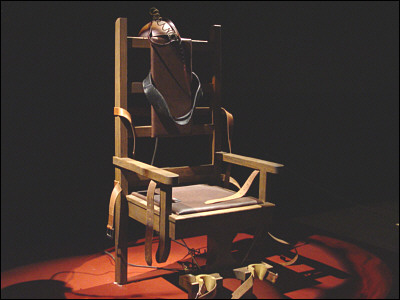 In the context of the International Conference taking place today in Lisbon, the Commission, jointly with the Presidency of the European Union and the Council of Europe, reaffirms its unreserved opposition to the use of capital punishment under all circumstances.
President Barroso said that "The European Union is unreservedly opposed to the use of capital punishment under all circumstances and has consistently called for the worldwide abolition of this punishment. Death penalty is against human dignity. We want to give visibility to the efforts of the many Non-Governmental Organisations and individuals who strive, day after day, towards the abolition of the death penalty.”
Vice-president Franco Frattini, Commissioner responsible for Justice, Freedom and Security, added that "The death penalty is a wild and revengeful parody of justice. Today, we can affirm with pride that death penalty has no place within the European model and confirm our commitment to promote universal abolition".
A growing number of countries are abolishing the death penalty: 133 countries have done so in practice or in law.
The Commission has funded around 30 anti-death penalty projects worldwide since 1994, with an overall budget of about €15 million.
For more information clich here.
/Mikkel
Monday, October 8, 2007
If Turkey enters the EU, the EU will destroy itself
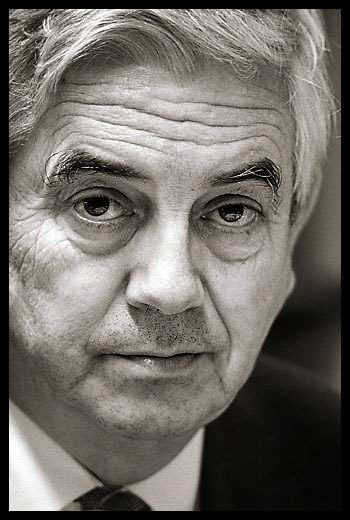
Former European Union Commissioner Frits Bolkestein warns in European leaders, in for the acceptance of Turkey as a member-state of the EU. Bolkestein fears that to many countries, like the Ukraine, Belarus and Moldava, with a weak economy cannot be refused as a EU member after Turkey is accepted.
Bolkesteins fear of a Ukraine membership is not entirely unjustified. President of the European Commission Barroso said recentley that the Ukraine has a 'European calling.' The former Commissioner from The Netherlands stresses that the European Union can't maintain its prosperous economy. Because of the expected migrant flow from the East to the West of Europe. 'I do not think that our social welfare system is strong enough to offer those migrants a living. I go even further: This burden of our social system will force us to have a complete reconstruction of our sytem and the way we do things,' according to Bolkestein.
Bolkestein expect a domino effect if Turkey is accepted. When Turkey is accepted there will be no more excuses to refuse Eastern European countries. Beacause after we accept a country without a European history as we know it in the West, Eastern countries can use it as an excuse that common history is not longer demanded to be a member of the EU, according to Bolkestein. 'Together with the Balkan and Eastern European countries the EU would have 40 member-states. 'Then the cohesion of the EU will be lost and the future of Europe with it,' says Bolkestein.
Sander Zurhake
The draft is ready
The draft reform treaty has been publised, and will be discusses in the Council of Europe at the summit 18th/19th of October.
You can find the text here.
/Mikkel
Saturday, October 6, 2007
Blatter against EU
 The President of the World Football Association FIFA, Sepp Blatter, wants to introduce a quota on foreign players in football teams. A quota of this kind would be a violation of EU law, since workers in the European Union have the right to circulate freely (http://euobserver.com/9/24920).
In an interview with the BBC on Friday, Blatter said he wants clubs to have no more than five non-nationals on the pitch at any time even if it goes against EU labour rules. With that move he wants to encourage homegrown talents and give them a chance to develop. Blatter argued that the national identity of football clubs has to be protected. At the moment football clubs in the EU are allowed to have three players from outside the 27 member bloc on the pitch, but since 1995 there hasn't been any restriction on players from the Union.
"The EU say that this is not possible based on free circulation of workers but in football principles are different...You cannot consider a footballer like any normal worker because you need 11 to play a match - and they are more artists than workers," Mr Blatter said.
However, the free movement of workers is one of the basic principles of the European Union. Do you agree with Mr. Blatter? Should there be an exception for football players? Does the national identity of football clubs really need protection? Does one exception lead to another? Are 11 foreigners in a team really a threat to the development of football? And should the European Union at all interfere in football?
-Sabine-
EU claims money back
 Commission to recover € 145.2 million of CAP expenditure from the Member States
Mariann Fischer Boel - Member of the European Commission responsible for agriculture and rural development.
A total of € 145.2 million of EU farm money unduly spent by Member States is claimed back as a result of a decision adopted by the European Commission. The money returns to the Community budget because of inadequate control procedures or non-compliance with EU rules on agricultural expenditure.
Member States are responsible for paying out and checking expenditure under the Common Agricultural Policy (CAP), and the Commission is required to ensure that Member States have made correct use of the funds.
Commenting on the decision, Mariann Fischer Boel, Commissioner for Agriculture and Rural Development, said:
"We have been working very hard to ensure the best possible control over farm spending. This is taxpayers’ money and we have to ensure effective controls on how it is used. We have made great strides in improving our controls and these efforts will continue in the future."
Main financial corrections
Under this latest decision, the 25th since the 1995 reform of the system for recovering unduly spent CAP money, funds will be recovered from Belgium, Germany, Denmark, Spain, France, Great Britain, Ireland, Italy, the Netherlands, Portugal and Sweden. The most significant individual corrections are:
€ 76.4 million charged to Italy for insufficient quality and quantity of controls in olive oil production sector.
€ 49.7 million charged to France for weaknesses in recognition criteria performed by the producers' organisations.
€ 6.2 million charged to Italy for weaknesses in controls of dried fodder production and of financial documents underlying claims for payments.
€ 3.7 million charged to Sweden for insufficient quantity and quality of the on-the-spot checks and low quality of the remote sensing checks in area aids scheme.
A good decision
I find this initiative very good, because it shows that the union will stop the misuse of our tax money. It also shows that the Union is having a greater control now compared to before.
Thumbs up.
/Mikkel
Friday, October 5, 2007
Germany in full support of French initiative
 The German Foreign Ministry has announced today that they are supporting French calls for tougher sanctions on Iran.
The annoucement is in response to a letter from French Foreign Minister Bernard Kouchner to all EU nations calling for increased pressure on Tehran.
"The European Union had to be prepared if Iran refused to co-operate over its disputed nuclear program", a spokeswoman said today.
- Mark Bentley
Thursday, October 4, 2007
France calls for a united EU to end Iran’s nuclear defiance

France has called for increased pressure in the row with Iran over its nuclear plans. French Foreign Minister Bernard Kouchner has written to the 27 members of the European Union calling for new sanctions.
He has petitioned fellow EU foreign ministers, claiming that Iran’s nuclear programme was giving it nuclear military capabilities, despite Tehran’s insistence that its uranium enrichment program is solely for peaceful energy generation.
In his letter he calls for urgency as Iran moves closer to the technology and urged the EU to “show its determination and set an example once again by taking the initiative of firm new measures."
Iran’s President Mahmoud Ahmadinejad vowed that he would never give in to international pressure. "On the nuclear issue, the enemies have assembled all they have but I tell the whole world that Iran has conquered difficult passes and no power can halt the successive victories of Iran," he was quoted as saying by the ISNA news agency.
Britain is firmly backing the French stance. Germany and Italy are against tougher sanctions and Spain is pushing for further diplomatic channels before resorting to sanctions. Germany and Italy both have important economic interests in Iran.
Last month Kouchner provoked global debate and an angry response from Tehran, by suggesting that the world should prepare for war with Iran. He said: "An Iran with a military nuclear capability is, for us, an unacceptable prospect."
The Islamic Republic retaliated by making an official complaint to France’s charge d'affaires in Tehran about his comments. France has taken a harder line against Iran since President Sarkozy was elected earlier this year.
- Mark Bentley
EU wants your finger
According to the Danish Newspaper Berlingske Tidende the Vice-President Franco Frattini, EU Commissioner responsible for Justice, Freedom and Security wants all EU citizens to give their fingerprints upon arrival to the European Union:
"It is to ensure us against terror and illegal immigration," he claims.Another thing is that the police must have better access to data about the travellers on plains.
Americans, Africans and everybody else, who do not live in the Union will have to stick their finger ahead if they want to travel into the secure area of the European Union. And the Union will not stop with fingerprints, but will also in the future use iris-scan or record of voice.That means the European Union will copy the system of America, who at this moment have more than 77 million fingerprints in their computers.
Abuse of data
"We have no idea if this will prevent terror, but we do know that there will be collected lots of personal data - and these data can be abused if they fall into the wrong hands," Danish politician Christel Schaldemose claims.The European Union is also thinking about using the so-called PNR-data from all passengers. PNR-data is data sucs as e-mail-addresses, credit card numbers, choice of food and private phonenumbers.
Success in the States
Some might claim that this is going to far. But in America similar systems has been used to catch more than 1800 people trying to get into the States without being allowed to go there. These are people who have an international search warrant over their heads or they have been convicted as criminals in the United States.
What do you think?
Is this some kind of new Echelon, where the national governments are trying to figure out all what the citizens are doing, and will use it against us?Should we believe the threat from terror? And do you believe that these kind of systems will make the world a better place to be (or have the bad guys won when they make our world much more difficult to live in)?
/Mikkel
Wednesday, October 3, 2007
Powerpoint en links
Just uploaded my ppt about European Politics to sharepoint; follow this link:
https://www.sharepoint.hu.nl/sites/Europe in the World 2007- 2008.
For institutions follow: http://europa.eu/institutions/index_en.htm en
and for budget: http://ec.europa.eu/budget/budget_glance/index_en.htm
Clinton speaks of global responsibilities
The Former President mixes with crowds as he leaves today's event
Former US President, Bill Clinton, was in Rotterdam today to speak about “corporate citizenship”, at the invitation of OVG Developments.
Speaking at OVG's new corporate headquarters – Las Palmas, to an audience containing prominent politicians, CEO's, NGO's and architects, he focused on the challenges stemming from globalization and global warming.
The former president talked about individuals, businesses and governments having a responsibility to work together to find solutions for problems such as global warming. He outlined the benefits of a joint approach to reduce the risks associated with climatic change.
Entrepreneur Coen van Oostrom established OVG in 1997 and the company is now widely recognised as one of the most successful and forward-thinking commercial project developers in the Netherlands - with an annual turnover of 200 million euros.
Following a meeting with ex-presidential challenger Al Gore last year, Van Oostrom was inspired to re-evaluate OVG’s real-estate projects that involved development in urban settings. “We decided to alter our course to reflect our ambition to enhance the environment in which we operate. We develop sustainable projects that contribute positively to the environment”.
President of the HBO Council, Doehle Terpstra was one of those who attended the event and he said: It was very interesting to listen to what Mr Clinton had to say”.
- Mark Bentley
Tuesday, October 2, 2007
Council meeting Council meeting:Transport, Telecommunications and Energy
;) View in the meeting room of the council
View in the meeting room of the council
More pictures
The press release:
The Council reached political agreement on a draft Directive amending the current postal Directive
97/67/EC concerning the full accomplishment of the internal market of Community postal services.
The Council adopted conclusions on the European Galileo and EGNOS satellite-navigation
programmes.
According to the Financial Times the British Unions were not pleased
Citing representatives of the postmen: “No service provider wants to deliver to the tip of Scotland. We have pointed this out from the start. The post industry is complicated. The people drawing up plans in Brussels believe the market will fix it, but it won’t.”
And about the Galileo project the Financial Times stressed the Dutch opposition to use farmin subsidies to finance the project:
The future of Europe’s rival to the US global positioning system was in doubt on Tuesday after transport ministers bickered over how it should be funded. Germany, the UK and the Netherlands rounded on a European Commission plan to raid farming subsidies to build the €3.4bn ($4.8bn) Galileo satellite navigation project.
Subscribe to:
Posts (Atom)