It costs European taxpayers approximately 200 million euros a year to move the Parliament between Brussels/Belgium and Strasbourg/France. A citizens' initiative has been set up to collect a million signatures to put an end to the 'waste of taxpayers' money. Of course it is bad for the environment as well... More than one million people signed already, if you want to do that you can visit the website: http://www.oneseat.eu/
-Antonie-
Tuesday, December 11, 2007
Oneseat Campaign

Talking about geography
Well - the video Antonie posted was just about a blonde - this video is even worse.
/Mikkel
Monday, December 10, 2007
Friday, December 7, 2007
Serbia threatens Kosovo with full scale war

The Serbian government threatens the Albanian in Kosovo with full scale war if they declare Kosovo independent. Jaap De Hoop-Scheffer, the secretary-general of NATO, warns Serbia not to use violence. 'We will act strongly against any faction that thinks to solve the conflict with violence,' says De Hoop-Scheffer.
After four months of negotiating between Serbia, Kosovo Albanians, EU, US and Russia it will be not likely that an agreement accepted by each party will be achieved.
Albanian nationalists got absolute majority after a massive victory during the recent elections. They made it very clear that they will declare the independence of Kosovo unilateraly. Serbia does not want to go further than far reaching autonomy for the province where Serbia's religious roots can be found and thinks it is justified if force is used. 'If someone does not respect the decision of the UN security council, a country is justified to start a war,' motivates Serbian Prime Minister Kostunica.
De Hoop Scheffer urges all parties not to seek their refuge in violence and warns Serbia not to defy NATO.
-Sander.
Wednesday, December 5, 2007
New schedule tutorials
It is impossible to plan all tutrials on a Tuesday as I intended. Due to lectures I have to split up in the following way.
All Tutorials take 15 min, venue is 2S110. Here are the time slots:
Tuesday Dec 11
13.00-13.15 Jillian Kestler D'Amours
13.15-13.30 Ragnhild Erevik Lea
13.30-13.45 Mikkel Dybtved Andersen
13.45-14.00 Peter Fijbes
14.00-14.15 Kinia Adamczyk
14.15-14.30 Sander Zurhake
14.30-14.45 Kurt Hickman
14.45-15.00 Josef Hinterseher
Wednesday Dec 12
10.30-10.45 Sabine Stang
10.45-11.00 Jurga Krastinaityte
11.00-11.15 Antonie van Campen
11.15-11.30 Mark Bentley
11.30-11.45 Nicolas van Caillie
Frank Lemke
11.45-12.00 Gaelle Engelberts
Tuesday, December 4, 2007
Mugabe is coming
 Lets have a small debate here at our blog.
Next weekend one of the biggest dictators in Africa comes to Europe.
He has driven his country out to a point, where the population is starving, the inflation is 15.000 percent, and his party Zanu PF is well known for beating any threats to the current power of Zimbabwe.
So thinking about this, is it fair that Robert Mugabe can travel into the EU without facing arrest, or should we just feel sorry for this man that just tries to do his best with a country, where the white people has stolen all the money after giving it up as a colony?
/Mikkel
German journalist gets court backing in EU leak case
This story is about a week old, but it is very important.
It is about a German journalist that was so impudent that he published articles on alleged irregularities in the EU's anti-fraud office OLAF, based on internal documents from the organisation.
OLAF wanted to know, who the source was, and accused the German journalist Hans-Martin Tillack of bribing some from OLAF.
And because of that the police searched Hans-Martin Tillacks offices, house etc.
Now the European Court of Human Rights has ruled that it was against the freedom of expression to try to make Hans-Martin Tillack tell who his source was.
So this is good news for Brussels based journalists.
Read the story and some background here.
/Mikkel
Before you become correspondants in Brussels
At the international semester in the spring of 2005 we tried to figure out good and bad sides of being a journalist in Brussels.
If you want to see the positive sides click here.
If you want to see the negative sides click here.
Give the flash half a minute to load.
And if you are going to those pages anyway, then you can take a look at some of the productions there - some of them are still very interesting (but not totally up to date).
Most of the links in the flash-productions do not work, but you can find anything in the menu to the left.
Have fun
/Mikkel
Thursday, November 29, 2007
A song for a EU common military force?
E-Type sing their dance hit "Eurofighter":
"The time is now
We won't back down
When we stand united we can save the day
Eurofighter
It's now"
Is it just a catchy song, or EU propaganda?
'Nervousness' in Brussels due to unclear treaty
 Because of its unclear division of power, analysts and politicians are not sure rather the EU's new Treaty is going to work in practice. In the Reform Treaty there will be three big jobs in Brussels: the president of the European Commission, the president of the European Council and the EU High Representative for Foreign Affairs and Security Policy. These three have overlapping job descriptions that are set to be defined only by the strength of the personalities involved, meaning that the treaty, agreed in October after years of wrangling, could be laying the ground for a political hornet's nest according to the EUobserver.
The EU's latest treaty will be put into place in 2009. European commission president Jose Manuel Barosso already publicly expressed his concern about the role of the EU in the future last month. ''The danger exists that the governments will handle problems among themselves, without taking into account the European instituions,'' he said in an interview.
EU ambassador for Slovenia, Igor Sencar, said at the European Policy Centre think tank in Brussels that he already feels the ''nervousness'' in Brussels about the lack of clarity in the document. His country will run the EU during the first half of next year. He indicated that the issues will have to be dealt with by EU leaders and that a "common view" should be drawn up by the end of next year.
Dr Andreas Maurer from the German thinktank Stiftung Wissenschaft und Politik in a recently published paper notes that the future EU president, who can hold office for up to five years risks becoming EU leaders' "play ball" because the office lacks its own ministry.
The paper asks if the new president has sufficient personnel, administrative and financial resources at his disposal to carry out duties such as leading, preparing and giving a sense of continuity to leading EU projects, such as on climate change and energy.
Monday, November 26, 2007
Cohesion works!
At least that’s what Charles White tried to convince us about during his presentation in
- Not only do we see that cohesion works in EU member states, but that counties like China, Brazil and the US learn from our way of dealing with these types of problems, said White, which used most of his presentation to present the new four main targets for cohesion policy in the budget period 2007 to 2013, which he listed as the following:
- Achieving growth and sustainable development
- Globalisation and restructuring
- Dealing with aging population and slower growth
- Ragnhild
Audiovisual service
Sharing the sights and sounds of Europe
While many see the European Union as a bureaucratic fortress, the EU itself at least tries to be more transparent for the citizens of the Single Market. The European Commission’s Audiovisual Service daily upload pictures, videos and audio, of what’s happening in the Commission. They have a broad archive, which also contains pictures and videos from the European Unions history. European audiovisual material dating from the 1940s is available.
It is easy to find what you need, there are several searching possibilities, and you can search thematic. Journalists are (almost) free to use these tools as they self prefer, as long as they credit the European Community. Press briefings and other important meetings are broadcasted as they are taking place. All the materials are available in professional standards. It is also possible to borrow TV-studios in the ‘Audiovisual services’ facilities.
This audio is from the website, and is an old archive clip of Willy Brandt. (Audio©European Community 2007)
- Ragnhild
Thursday, November 22, 2007
Singing in the Ruhr
It has been used for music videos before, but - ooooops, we did it again.
- Ragnhild
Tuesday, November 20, 2007
EU wants to handle Kosovo issue
 The EU warned Kosovo's probable new prime minister that it shouldn't rush a unilateral declaration of independence.
Former guerilla leader Hashim Thaci, who is expected to become prime minister of the majority ethnic Albanian province after Saturday's election, said parliament would declare independence after a December 10 deadline for international mediation efforts - a move that would almost certainly be resisted by Russia, the Daily Telegraph reported from Brussels today.
The EU is anxious to avoid a repeat of its dilemma in the 1990s, when internal splits over how to deal with the Balkan wars showed its ineffectiveness as a foreign policy player, letting the US handle the crisis.
"This is a European challenge. It is not one we can ask the United States to solve for us," said Jim Murphy, Britain's Europe minister.
Kinia
Saturday, November 17, 2007
EU Environmental Policy Still Up in the Air

The European Union's place at the forefront of environmental policy will be solidified if its newly proposed legislation passes: EU representatives are pushing for a cap on emissions for commercial airlines flying to and from Europe.
The International Herald Tribune reported that the new plans faced harsh criticism from the US airline industry, who could potentially bring Europe to court at the World Trade Organization for unfair trade practices. They argued that it "broke with international aviation practices, would cost companies billions of dollars and could lead to sharp increases in airline ticket prices." Carl Burleson, the director of the office of environment and energy at the U.S. Federal Aviation Administration, also said that the EU should not make such decisions unilaterally, and instead needs to discuss the agreements with all the international governments involved.
Still, the US isn't the only party upset about the proposed emission restrictions. International airline companies are equally displeased. According to Taneli Hassinen, a spokesman for Finnair, the new system would cost the airline €50 million per year, if not more.
Thus, as is often the case, a struggle exists between beneficial environmental practices and economic viability. And while the EU remains a strong leader in terms of protecting the environment and respecting environmental laws, whether or not it will be able to stand firm against US and airline company pressure, remains to be seen.
- Jillian -
Thursday, November 15, 2007
Write about EU enlargement... and win a trip to the Balkans
 A competition launched by the EU aims to encourage young journalists to enter the market.
Young journalists aged 17-27 from all the EU member states as well as from candidate and potential candidate countries (Western Balkans and Turkey) are invited to submit to the competition a recently published article on EU enlargement (publication date between January 2007 and 15 March 2008).
The Commission's Directorate-General for Enlargement in cooperation with the European Youth Press association launched today a pan-European competition for young journalists from all over Europe. The objective of the competition is to encourage young journalists to reflect and express their views on the European Union's enlargement policy.
“Enlarge your vision” - European Young Journalist Award on EU Enlargement
Brussels, 15 November 2007
“Enlarge your vision” - European Young Journalist Award on EU Enlargement
The Commission's Directorate-General for Enlargement in cooperation with the European Youth Press association[1] launched today a pan-European competition for young journalists from all over Europe. The objective of the competition is to encourage young journalists to reflect and express their views on the European Union's enlargement policy.
On the occasion of the launch of the competition, which will run from 15 November 2007 to 15 March 2008, Commissioner for Enlargement Olli Rehn said: “I welcome the launch of this competition and look forward to learning more about the views of young journalists on the enlargement policy. They are important opinion-leaders for their generation. I would like to invite them to share their experiences and visions of our common European future. Their ideas will further nourish the debates that will determine the shape of our continent.”
The participants can enter the competition on a special website created: www.EUjournalist-award.eu. There, they can also read articles on the EU's enlargement policy and find interesting tips for a career in journalism. At the end of the competition in April 2008, national juries made up of media representatives will select a winning article for each country and these articles will be published on the competition website. All 35 winners will be invited on a joint trip through Balkan countries and will have the opportunity to participate in a closing conference with media representatives from various countries in June 2008.
Kinia
Another Round of CAP Reform...

The European Commission announced that on November 20, it will present a new proposal to cut agricultural payments for big farmers and instead finance more rural development projects. The exact figures of the subsidy cuts remain uncertain and will only be decided upon next Spring.
Still, Commission agricultural spokesman Michael Mann said on November 7 that "'perhaps' the plan could entail a 10% reduction in payments for all farms receiving more than €100,000, 25% for those getting more than 200,000, and 45% for those above €300,000." (http://www.euractiv.com/en/cap/eu-plans-subsidy-cuts-big-farms/article-168205)
The proposal will no doubt face stern criticism, but not necessarily from the usual suspects, or in this case, the usual opposers of CAP reform. In fact, France (which historically has been opposed to CAP change) will not be drastically affected since while it receives a high level of total subsidies, it is composed primarily of smaller farms. Instead, Great Britain and Germany will likely be against the new set of reforms since most of Europe's biggest farms are concentrated in these two countries.
Nonetheless, NGO farmsubsidy.org reported that the cuts will only affect 0.3% of subsidy recipients, thereby reducing CAP subsidies by €554 million (only 1.7% of all payments).
So, ultimately, whether or not this new set of CAP reform will effectively pass is one question. The other, and perhaps even more important query, is whether these changes will actually alter how Europe deals with the big business that is farming, and by extension, agricultural spending.
- Jillian -
Wednesday, November 14, 2007
Cheaper communication coming soon to a EU country near you
 A new EU proposal to reform the EU telecoms rules should give EU consumers more choice, better prices and accessibility for cell phone, internet and other telecom services. "From today onwards, a single market without borders for Europe's telecoms operators and consumers is no longer only a dream," said José Manuel Barroso, President of the European Commission. "Telecoms is a field where our single market can bring about very concrete results for every citizen in terms of more choice and lower prices, whether for mobile phones or for broadband internet connections."
The "Telecoms Reform Package", which was presented by the Commission to the European Parliament in Strasbourg today, will change the EU Telecoms Rules of 2002. It is expected to become law by the end of 2009. It includes more consumer rights (quickly switching telecoms operators), more consumer choice, more security, more independent watchdogs, etc.
Kinia
Tuesday, November 13, 2007
European Defense

France has announced it's intentions to push for a Europe based defense when it takes the EU presidency in the second half of 2008. The defense would include a Brussels-based EU planning staff, exchanges between professional soldiers and a harmonization of military educations. However, these proposals will likely raise concerns from fellow member states.
As reported in an EU Observer.com article, French defence minister Hervé Morin said that Paris will put defence high on the agenda when it takes over the rotating presidency. Morin when on to say that defense was an absolute priority which is at least as important for European integration as the EU's common currency.
"With the common currency, we have created a strong symbol for Europe. But nothing can better express the European community of fate than common defence, a common sense of Europe's threats and security interests," he said.
Morin said that Paris is still coordinating with its EU partners about the logistics of the proposal but "independent crisis capacities" for Europe would be one key goal.
However France is not going to push this agenda with ease. It is likely to face skepticism from the United Kingdom which dislikes the idea of an EU defence headquarters and would like European defence forces to focus on peacekeeping and humanitarian tasks. The UK traditionally sees combat operations as part of NATO.
Nicolas Sarkozy however is strongly pushing for a military role for the EU which is independent from that of the Atlantic alliance. Mr Sarkozy has said he would like France to re-join the military command structures of NATO, but on the condition that EU defence is also strengthened.
-Kurt Hickman
Council of Europe against anti-terror policy
The procedures that the EU and UN use to place suspected terrorists on a black list is "completely arbitrary", and are in contradiction to the democratic principles, according to the Council of Europe, the organization that overlooks human rights.
With the draft-report on blacklisting by the legal council of the parlementary assembly of the Council of Europe, the council hopes to change the methods that are currently used to counter terrorism threats.
'To be effective, the struggle against terrorism has to be believable', Dick Mary said. He is a Swiss senator in the parlementary Assembly and he wrote the report on blacklisting.
The report states that there are no procedures to check the choices that are being made about suspected persons. Some people can be added to the black list without proper suspicions and they are unable to defend themselves against it.
Suspects on the black list may face the closing of their bank accounts or restrictions on free travel.
- Peter Fijbes -
EYOU-Tube
Youtube is evolving into much more than just a platform for music, tv and comic videos. The European Comission is also active on Youtube. But they're not the only ones that upload footage on the EU, eurosceptics use the platform to spread their views too. An overview.
The European Commission has its own Youtube account. The video's posted here are (of course) all positive. They post video's with titles like: "What does equality mean to you" and "50 years of protecting the European Environment.
The Video's don't just show the marketing video's that the EU creates, but they express their views and ideals on Europe too. The following video is on an program that wants better informed European Customers.
That opinion that the EU is not only beautiful but might be negative too cannot be found on the page of the European Commission. Others actually do express that feeling and upload video's that are more sceptical in nature. For instance, the following video on Barrosso. He said that the EU will be comparable to an Empire when the new treaty is put into force. On Youtube, this led to many angry reactions.
Another, even more sceptical video is called: "The Real Face of the EU in 10 minutes". It starts with the opinion that 'we are decieved'. And it also states that the European leaders conspire and keep us from the real truth.
- Peter Fijbes -
British Queen benefits from CAP
 According to the British daily The Independent, estimates published earlier this year showed that the Queen, one of the wealthiest women in the world, receives approximately £404,000 a year in European subsidies for her Sandringham estate and at least £140,000 for Windsor Castle.
-Kinia
Members of the Danish Royal Family were also among those receiving some of the largest farm subsidy payments, The Independent claimed, basing itself on a survey by farmsubsidy.org
The European Commission is drafting a proposal to limit subsidies for rich landowners. The plans, due to be submitted for consultation with EU member states on 20 November, will suggest that some of the largest payments to super-rich landowners and industrial farms could be reduced by as much as 45 per cent, The Independent claims.
Monday, November 12, 2007
EU willing to work with OPEC on oil prices
ROME - As the oil price spikes to nearly $100 a barrel, EU commission President
Jose Manuel Barroso says he willing to work with the OPEC to make the oil market more transparent.
Barroso also stated that he believes in the dynamics of the free market and pleads for the oil prices to be revealed instead of regulated. "We resist regulation. We believe in markets," Barroso told journalists at the World Energy Congress in Rome.
Last week, Abdullah al-Badri, the Secretary General of the OPEC, said he wanted more rules and regulations to prevent oil speculation contaminating the normal supply and demand dynamics.
- By Peter Fijbes-
Saturday, November 3, 2007
All Europeans are equal, but some Europeans are more equal than others.

According to a European directive, member states are allowed to limit freedom of movement if they want so. Italy said it wanted to expulse thousands of Romanians. It had already started in Rome and Milan.
Nicolas Van Caillie
Italian police begin to round up Romanians
Italian police yesterday began combing shantytowns in Rome and other big cities to locate Romanians targeted for expulsion under legislation introduced after the gruesome murder of a woman on the outskirts of the capital this week.
One small makeshift settlement near the centre had been bulldozed by midday and its inhabitants bussed away for identification. The clearance of another site, where the alleged killer of the murdered woman lived, was held up only at the request of forensic science experts so that they could finish their hunt for clues.
Carrying their belongings in bundles and plastic bags, residents fled the camp in a quiet part of northern Rome as police stood ready to tear down their shacks, already made sodden and fragile by recent heavy rain.
The prefect of Rome, Carlo Mosca, said: "I shall sign the first expulsion orders straightaway. A hard line is needed because, faced with animals, the only way to react is with maximum severity." Italian media reports said the police were anticipating several thousand expulsions.
Mr Mosca's comments, which did not prompt controversy, came amid a nationwide outcry over the death late on Thursday of Giovanna Reggiani, the 47-year-old wife of a navy captain. Ms Reggiani was robbed, sexually assaulted, beaten and then dumped in a ditch near her home.
A Romanian of Roma origin, Nicolae Mailat, 24, was remanded in custody by a magistrate yesterday, accused of murder, sexual assault and theft. His duty lawyer said he had only admitted to stealing Ms Reggiani's bag.
The killing was the latest in a string of ugly crimes this year blamed on Romanians, who form Italy's biggest immigrant community.
An MP from the anti-immigrant Northern League said his party was organising vigilante patrols in predominantly immigrant areas of Turin and Piacenza today and tomorrow. In Rome officials of the Freedom Circles, a network of political clubs set up by Silvio Berlusconi's latest protegee, Maria Vittoria Brambilla, also announced patrols. But Ms Brambilla denied all knowledge of the scheme and said she had not authorised it.
A decree published yesterday which took effect immediately empowered prefects to order the removal from Italy of EU citizens judged to pose a threat to law and order. However, it includes certain guarantees. Expulsion orders need the endorsement of a justice of the peace or, in the case of suspects in investigations and defendants in trials, the approval of a prosecutor or judge respectively. Italy's most senior police officer, Antonio Manganelli, said EU citizens would be treated "with absolute respect for human dignity, without witch-hunts".
But the head of Italy's criminal lawyers' association, Oreste Dominioni, called on his members to protest at the measure, which he described as "authoritarian".
Tens of thousands of immigrants from eastern Europe live in shantytowns in the major cities, and particularly Rome. At the camp demolished yesterday a Russian who gave his name as Sergei said: "I've been here for a year. I've never had problems with the law. I don't know now what the future holds."
sources: The Guardian, Google news, Le Monde.
Tuesday, October 30, 2007
Sarkozy walks out of US TV interview
Nicolas Sarkozy abruptly ended a '60 Minutes' interview aimed at introducing him to the United States. He refused to answer questions about his wife. Two weeks later his divorce was announced.
Antonie van Campen
Monday, October 29, 2007
'Lisbon treaty made to avoid referendum'
 Former French president Valerie Giscard d'Estaing, architect of the rejected constitution, published an open letter in Le Monde and some other European newspapers saying that the new Lisbon treaty alienates the citizens further.
'The EU's new treaty is the same as the rejected constitution, only the format has been changed to avoid referendums,' he said. The former chairman of the European Convention explained that it is thanks to the facts that the articles are spread out and constitutional vocabulary has been removed a referendums is being avoid.
His words are, according to the EUobserver, likely to fuel the calls for referendums in the UK and Denmark where the governments are arguing that there is no need for a public poll on the Lisbon treaty because it is sufficiently different from the EU constitution.
-Antonie van Campen-
Monday, October 22, 2007
Kick out the black sheep!
 Free speech is needed if a democratic system is to function well. But should it be upheld when it is used to encourage racism, sexism, etc?
The Swiss People’s Party (SVP) in Switzerland has stretched the limits of politically correct statements to gain more votes.
You can go on the SVP website (only in German and French) to play several games: "kick the immigrants out", "shoot at the EU", etc.
Despite the use of controversial campaign tactics, this nationalist party received the highest vote ever recorded for an individual political party in Switzerland on Sunday. This will mean that the country is very likely to adopt a tougher stance towards immigration and the European Union.
Going against the treaty signed between Switzerland and the EU, the SVP is expected to veto against open borders for workers from Bulgaria and Romania, the newest members of the Union. Also, the SVP wants to "uphold Switzerland’s right to set competitive rates of corporate taxation in the face of claims by the European Commission that the Swiss system represents unfair competition," as the Financial Times reports.
Gaëlle Engelberts
Friday, October 19, 2007
Mandelson calls for EU to align with US over Chinese "juggernaut"
 European trade commissioner, Peter Mandelson, has called for a more aggressive stance against Beijing, after conceding that the European Union has been unsuccessful in securing concessions over the widening trade gap with China.
In a document addressed to the European Commission president, Jose Manuel Barroso, Mandelson has said that China has "failed to respond to a policy of co-operation and dialogue."
In his four-page letter, he severely criticises Beijing, arguing that, “to some extent the Chinese juggernaut is out of control” and that the “European Union is sitting on a time bomb.”
Mandelson has also said that the European Union should align trade policy closer to the US and take more cases against the Chinese to the World Trade Organisation. Since 2001 the EU has only taken one case to the WTO, whereas the US has taken six.
The EU trade deficit with China rose by 20 percent last year and is now at a higher rate than the United States, according to the European Commission.
China is Europe’s largest supplier of manufactured goods, but the EU exports more to Switzerland than it does to China. It has been estimated that regulatory discrimination and non-tariff barriers currently cost European companies 20 billion Euros per year.
His comments come after calls from French president, Nicolas Sarkozy and German chancellor, Angela Merkel, for a tougher stance against emerging Asian economies over trade.
The European Commission is near to making decisions on a number of trade disputes, over commodities such as steel that could lead to confrontations between the EU and China. Concerns are increasing about the high levels of Chinese imports and the effect on European jobs.
- Mark Bentley
Thursday, October 18, 2007
Negotiations on the Reform Treaty

Europe is holding its breath at the negotiations on the new Reform Treaty. In the EU summit that started today in Lisbon the 27 leaders of the member states are hoping to come to a compromise.
Poland and Britain are the biggest "trouble makers". Poland is strict on its demand to get the Ioannina mechanism written into the treaty. The mechanism would allow any member country to block an EU decision for a period of up to two years.
Britain is defending its opt-outs from areas of taxation, foreign policy, justice, security and others.
Italy, which fought for keeping a larger number of seats in the European Parliament, is ready to compromise.
Watch a video summary of the current developements of the negotiation in the www.euronews.net page.
- Jurga Krastinaityte
Poland and Britain are the biggest "trouble makers". Poland is strict on its demand to get the Ioannina mechanism written into the treaty. The mechanism would allow any member country to block an EU decision for a period of up to two years.
Britain is defending its opt-outs from areas of taxation, foreign policy, justice, security and others.
Italy, which fought for keeping a larger number of seats in the European Parliament, is ready to compromise.
Watch a video summary of the current developements of the negotiation in the www.euronews.net page.
- Jurga Krastinaityte
Wednesday, October 17, 2007
First Step Towards Montenegro's EU Membership

The EU and Montenegro signed the Stabilisation and Association Agreement (SAA). The document opened up the trade between EU and the youngest European country and is seen as a step towards its greater European integration.
Montenegro hopes to officially apply for EU membership next year, reports the EUobserver.com. Before joining the EU, the country of only 65o,ooo inhabitants has to go through significant reforms of its public administration, judicial system and to perform better on fight against corruption. Therefore Montenegro is not likely to join in the near future. However, the country is relying much on the Slovenian EU presidency in the first half of 2008.
The process of Montenegrin European integration was sped up by its independence from Serbia in May 2006. Take a look at the BBC's profile of Montenegro.
What do you think about the new agreement? Do you believe Montenegro will become a member in the coming decade? Should it be admitted? Do you agree that Montenegro seems to be better off without Serbia? Having in mind our discussion in European History class, how can their case be compared to Kosovo?
- Jurga Krastinaityte
Montenegro hopes to officially apply for EU membership next year, reports the EUobserver.com. Before joining the EU, the country of only 65o,ooo inhabitants has to go through significant reforms of its public administration, judicial system and to perform better on fight against corruption. Therefore Montenegro is not likely to join in the near future. However, the country is relying much on the Slovenian EU presidency in the first half of 2008.
The process of Montenegrin European integration was sped up by its independence from Serbia in May 2006. Take a look at the BBC's profile of Montenegro.
What do you think about the new agreement? Do you believe Montenegro will become a member in the coming decade? Should it be admitted? Do you agree that Montenegro seems to be better off without Serbia? Having in mind our discussion in European History class, how can their case be compared to Kosovo?
- Jurga Krastinaityte
Monday, October 15, 2007
Feed our blog to your computer
Let the news come to you! Paste the RSS feed
feed://whatsupeurope.blogspot.com/feeds/posts/default
into your browser and be the first one to know when a new post is written. You can also click on the "Subscribe to: Posts (Atom)" link posted at the bottom of this page. Same result, great news! ;)
Sunday, October 14, 2007
What's in store for Kosovo?
 What will be the final outcome for the province of Kosovo? Talks between Serbs and Albanians have reached stalemate Sunday as both parties refused to compromise.
Kosovo's Albanian leadership seeks independence for Kosovo, but Serbia is vehemently against it. "Kosovo will never be an independent state, no matter pressures, conditionings and threats Serbia is exposed to," said Serbian Prime Minister Vojislav Kostunica, Beta news agency reported.
Talks are to continue on Oct. 22 in Vienna, and the final deadline for reaching an outcome has been set to Dec. 10. But, with Kosovo squeezed between the Serbs' attachement to the province as a "craddle of religious and national identity"(see Why Kosovo is central to Serb national epic?) and a population almost entirely constituted of Albanians, the future of the province is all but certain.
Albanian authorities in Kosovo have threaten to unilaterally declare independence if a deal isn't reached by the fixed deadline. Dan Bilefsky of the International Herald Tribune believes this would only increase tensions.
"Should Pristina follow through on its threat, such a move would aggravate already growing tensions between Russia, the EU and Washington, undermine the EU's already flailing foreign policy and, worse, potentially plunge the region into civil war."
Will a settlement between Serbs and Albanians ever be reached in this region? And what would be the consequences of an independent Kosovo?
Gaëlle Engelberts
EU Videos
If you are interested in some European Union PR: http://www.youtube.com/eutube
Sometime the EU uses dubious methods to get through to the public...
EU for Journalists
The EJC has launched a website to help journalists reporting on the European Union. The EU for journalists - Brussels in brief website simplifies the maze of information available on the EU so reporters can easily get a grip of the key issues and players. The site also has a Forum for EU-related questions, comments and to advertise your services.
Visit EU for journalists - Brussels in brief at http://www.eu4journalists.eu.
Saturday, October 13, 2007
Enlargement of Schengen area raises concerns

As of next year, nine new member states will join Schengen, an agreement aimed at abolishing internal borders within the Union. While this enlargement raises some security concerns amongst the current Schengen group, the states east of the new line are the ones who worry most; this is seen by some as a new Iron Curtain.
As reported by the Economist, Czech Republic, Estonia, Hungary, Latvia, Lithuania, Malta, Poland, Slovakia and Slovenia worked since 2004 on fulfilling the requirements put into place as prerequisites for their admittance into Schengen. This included many security related changes, as well as data sharing through the Schengen Information System (SIS) put in place to track persons or objects.
As part of these changes, checks and controls will have to be intensified between new Schengen members and their eastern neighbours. Ending the unofficial border porousness between countries like Ukraine and Poland for example could have important consequences.
One of the biggest problems will probably be the new visa requirement. This will mean additional travel costs that could amount to as much as €60. “For people from Ukraine, who can now travel to Poland free, the visa fee will be a major obstacle,” says Orysia Lutsevych, director of Open Ukraine, a foundation to promote east-west exchanges.
As for the security concerns of the current Schengen members, they are mainly concentrated within Austria who fears that the new members won't be able to control their own frontiers. Austria's Interior minister, Günther Platter, even talked of setting up military checkpoints within Austria to insure security.
But, the enlargement of the Schengen area can also be seen as good news for Western Europe. As written on www.lostweekend.com travellers will now have to go through "less bureaucracy, less waiting time and [gain access to] more excellent countries."
Gaëlle EngelbertsAs reported by the Economist, Czech Republic, Estonia, Hungary, Latvia, Lithuania, Malta, Poland, Slovakia and Slovenia worked since 2004 on fulfilling the requirements put into place as prerequisites for their admittance into Schengen. This included many security related changes, as well as data sharing through the Schengen Information System (SIS) put in place to track persons or objects.
As part of these changes, checks and controls will have to be intensified between new Schengen members and their eastern neighbours. Ending the unofficial border porousness between countries like Ukraine and Poland for example could have important consequences.
One of the biggest problems will probably be the new visa requirement. This will mean additional travel costs that could amount to as much as €60. “For people from Ukraine, who can now travel to Poland free, the visa fee will be a major obstacle,” says Orysia Lutsevych, director of Open Ukraine, a foundation to promote east-west exchanges.
As for the security concerns of the current Schengen members, they are mainly concentrated within Austria who fears that the new members won't be able to control their own frontiers. Austria's Interior minister, Günther Platter, even talked of setting up military checkpoints within Austria to insure security.
But, the enlargement of the Schengen area can also be seen as good news for Western Europe. As written on www.lostweekend.com travellers will now have to go through "less bureaucracy, less waiting time and [gain access to] more excellent countries."
Thursday, October 11, 2007
When Scandinavians go to the US
This has nothing to do with the EU, but I just feel like sharing this clip with you.
It is the Norwegian journalist Pia Haraldsen asking funny questions to the American politician James S. Oddo.
Just to show you how bad it can go, when Scandinavians are outside their own territory.
/Mikkel
Treaty for nerds
 For those who are very interested in the new treaty, I have found a comparison between the "Constitutional Treaty" and the new draft treaty.
There are not a lot of changes.
The new draft treaty.
Comparison.
Now the question is - is it fair that the Politicians are trying to sell old wine on new bottles?
I find it a bit problematic that the citizens have to rely on other sources than the official ones from the EU. It makes it more easy for oppinion makers to write in their own political views in the texts.
/Mikkel
Wednesday, October 10, 2007
Erasmus Mundus participants help make the scheme even better
 On 11 October, Ján Figel’, European Commissioner in charge of Education, Training, Culture and Youth, will welcome over 100 Erasmus Mundus students and alumni to Brussels. They come from all continents and represent some 4,000 Erasmus Mundus students who are currently following prestigious Erasmus Mundus Masters courses in universities across Europe. In July, the Commission proposed to renew the program for the period 2009-2013.
The two-day seminar (11-12 October) gives students the opportunity to exchange views on their Erasmus Mundus experiences in European universities.
During the seminar, the students' feedback on the programme will be discussed, as well as the first results of the "Global Promotion Project" that is meant to raise the profile and appeal of European higher education worldwide with an emphasis on the promotion of Europe as a destination for international students.
Since the launch of the Erasmus Mundus programme in 2004, 80 joint masters courses have become operational and over 4,000 students from third countries have received an Erasmus Mundus scholarship to obtain a degree in Europe.
In July 2007, the European Commission proposed to launch the new, second phase of the Erasmus Mundus programme, for the period 2009-13. The Commission proposed a budget of just over 950 million euros over the five-year period concerned. The proposal will be debated further in the months to come.
More information on Erasmus Mundus.
/Mikkel
The European Union is united against capital punishment
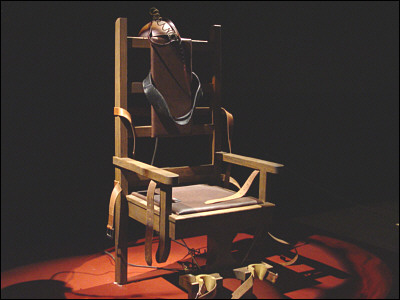 In the context of the International Conference taking place today in Lisbon, the Commission, jointly with the Presidency of the European Union and the Council of Europe, reaffirms its unreserved opposition to the use of capital punishment under all circumstances.
President Barroso said that "The European Union is unreservedly opposed to the use of capital punishment under all circumstances and has consistently called for the worldwide abolition of this punishment. Death penalty is against human dignity. We want to give visibility to the efforts of the many Non-Governmental Organisations and individuals who strive, day after day, towards the abolition of the death penalty.”
Vice-president Franco Frattini, Commissioner responsible for Justice, Freedom and Security, added that "The death penalty is a wild and revengeful parody of justice. Today, we can affirm with pride that death penalty has no place within the European model and confirm our commitment to promote universal abolition".
A growing number of countries are abolishing the death penalty: 133 countries have done so in practice or in law.
The Commission has funded around 30 anti-death penalty projects worldwide since 1994, with an overall budget of about €15 million.
For more information clich here.
/Mikkel
Monday, October 8, 2007
If Turkey enters the EU, the EU will destroy itself
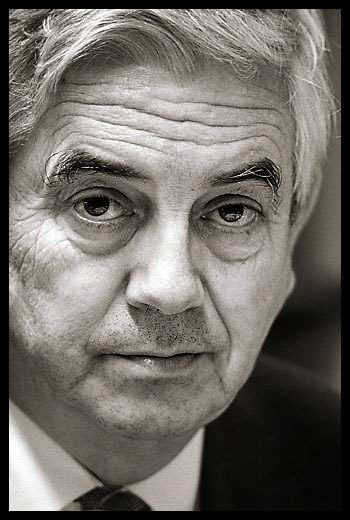
Former European Union Commissioner Frits Bolkestein warns in European leaders, in for the acceptance of Turkey as a member-state of the EU. Bolkestein fears that to many countries, like the Ukraine, Belarus and Moldava, with a weak economy cannot be refused as a EU member after Turkey is accepted.
Bolkesteins fear of a Ukraine membership is not entirely unjustified. President of the European Commission Barroso said recentley that the Ukraine has a 'European calling.' The former Commissioner from The Netherlands stresses that the European Union can't maintain its prosperous economy. Because of the expected migrant flow from the East to the West of Europe. 'I do not think that our social welfare system is strong enough to offer those migrants a living. I go even further: This burden of our social system will force us to have a complete reconstruction of our sytem and the way we do things,' according to Bolkestein.
Bolkestein expect a domino effect if Turkey is accepted. When Turkey is accepted there will be no more excuses to refuse Eastern European countries. Beacause after we accept a country without a European history as we know it in the West, Eastern countries can use it as an excuse that common history is not longer demanded to be a member of the EU, according to Bolkestein. 'Together with the Balkan and Eastern European countries the EU would have 40 member-states. 'Then the cohesion of the EU will be lost and the future of Europe with it,' says Bolkestein.
Sander Zurhake
The draft is ready
The draft reform treaty has been publised, and will be discusses in the Council of Europe at the summit 18th/19th of October.
You can find the text here.
/Mikkel
Saturday, October 6, 2007
Blatter against EU
 The President of the World Football Association FIFA, Sepp Blatter, wants to introduce a quota on foreign players in football teams. A quota of this kind would be a violation of EU law, since workers in the European Union have the right to circulate freely (http://euobserver.com/9/24920).
In an interview with the BBC on Friday, Blatter said he wants clubs to have no more than five non-nationals on the pitch at any time even if it goes against EU labour rules. With that move he wants to encourage homegrown talents and give them a chance to develop. Blatter argued that the national identity of football clubs has to be protected. At the moment football clubs in the EU are allowed to have three players from outside the 27 member bloc on the pitch, but since 1995 there hasn't been any restriction on players from the Union.
"The EU say that this is not possible based on free circulation of workers but in football principles are different...You cannot consider a footballer like any normal worker because you need 11 to play a match - and they are more artists than workers," Mr Blatter said.
However, the free movement of workers is one of the basic principles of the European Union. Do you agree with Mr. Blatter? Should there be an exception for football players? Does the national identity of football clubs really need protection? Does one exception lead to another? Are 11 foreigners in a team really a threat to the development of football? And should the European Union at all interfere in football?
-Sabine-
EU claims money back
 Commission to recover € 145.2 million of CAP expenditure from the Member States
Mariann Fischer Boel - Member of the European Commission responsible for agriculture and rural development.
A total of € 145.2 million of EU farm money unduly spent by Member States is claimed back as a result of a decision adopted by the European Commission. The money returns to the Community budget because of inadequate control procedures or non-compliance with EU rules on agricultural expenditure.
Member States are responsible for paying out and checking expenditure under the Common Agricultural Policy (CAP), and the Commission is required to ensure that Member States have made correct use of the funds.
Commenting on the decision, Mariann Fischer Boel, Commissioner for Agriculture and Rural Development, said:
"We have been working very hard to ensure the best possible control over farm spending. This is taxpayers’ money and we have to ensure effective controls on how it is used. We have made great strides in improving our controls and these efforts will continue in the future."
Main financial corrections
Under this latest decision, the 25th since the 1995 reform of the system for recovering unduly spent CAP money, funds will be recovered from Belgium, Germany, Denmark, Spain, France, Great Britain, Ireland, Italy, the Netherlands, Portugal and Sweden. The most significant individual corrections are:
€ 76.4 million charged to Italy for insufficient quality and quantity of controls in olive oil production sector.
€ 49.7 million charged to France for weaknesses in recognition criteria performed by the producers' organisations.
€ 6.2 million charged to Italy for weaknesses in controls of dried fodder production and of financial documents underlying claims for payments.
€ 3.7 million charged to Sweden for insufficient quantity and quality of the on-the-spot checks and low quality of the remote sensing checks in area aids scheme.
A good decision
I find this initiative very good, because it shows that the union will stop the misuse of our tax money. It also shows that the Union is having a greater control now compared to before.
Thumbs up.
/Mikkel
Friday, October 5, 2007
Germany in full support of French initiative
 The German Foreign Ministry has announced today that they are supporting French calls for tougher sanctions on Iran.
The annoucement is in response to a letter from French Foreign Minister Bernard Kouchner to all EU nations calling for increased pressure on Tehran.
"The European Union had to be prepared if Iran refused to co-operate over its disputed nuclear program", a spokeswoman said today.
- Mark Bentley
Thursday, October 4, 2007
France calls for a united EU to end Iran’s nuclear defiance

France has called for increased pressure in the row with Iran over its nuclear plans. French Foreign Minister Bernard Kouchner has written to the 27 members of the European Union calling for new sanctions.
He has petitioned fellow EU foreign ministers, claiming that Iran’s nuclear programme was giving it nuclear military capabilities, despite Tehran’s insistence that its uranium enrichment program is solely for peaceful energy generation.
In his letter he calls for urgency as Iran moves closer to the technology and urged the EU to “show its determination and set an example once again by taking the initiative of firm new measures."
Iran’s President Mahmoud Ahmadinejad vowed that he would never give in to international pressure. "On the nuclear issue, the enemies have assembled all they have but I tell the whole world that Iran has conquered difficult passes and no power can halt the successive victories of Iran," he was quoted as saying by the ISNA news agency.
Britain is firmly backing the French stance. Germany and Italy are against tougher sanctions and Spain is pushing for further diplomatic channels before resorting to sanctions. Germany and Italy both have important economic interests in Iran.
Last month Kouchner provoked global debate and an angry response from Tehran, by suggesting that the world should prepare for war with Iran. He said: "An Iran with a military nuclear capability is, for us, an unacceptable prospect."
The Islamic Republic retaliated by making an official complaint to France’s charge d'affaires in Tehran about his comments. France has taken a harder line against Iran since President Sarkozy was elected earlier this year.
- Mark Bentley
EU wants your finger
According to the Danish Newspaper Berlingske Tidende the Vice-President Franco Frattini, EU Commissioner responsible for Justice, Freedom and Security wants all EU citizens to give their fingerprints upon arrival to the European Union:
"It is to ensure us against terror and illegal immigration," he claims.Another thing is that the police must have better access to data about the travellers on plains.
Americans, Africans and everybody else, who do not live in the Union will have to stick their finger ahead if they want to travel into the secure area of the European Union. And the Union will not stop with fingerprints, but will also in the future use iris-scan or record of voice.That means the European Union will copy the system of America, who at this moment have more than 77 million fingerprints in their computers.
Abuse of data
"We have no idea if this will prevent terror, but we do know that there will be collected lots of personal data - and these data can be abused if they fall into the wrong hands," Danish politician Christel Schaldemose claims.The European Union is also thinking about using the so-called PNR-data from all passengers. PNR-data is data sucs as e-mail-addresses, credit card numbers, choice of food and private phonenumbers.
Success in the States
Some might claim that this is going to far. But in America similar systems has been used to catch more than 1800 people trying to get into the States without being allowed to go there. These are people who have an international search warrant over their heads or they have been convicted as criminals in the United States.
What do you think?
Is this some kind of new Echelon, where the national governments are trying to figure out all what the citizens are doing, and will use it against us?Should we believe the threat from terror? And do you believe that these kind of systems will make the world a better place to be (or have the bad guys won when they make our world much more difficult to live in)?
/Mikkel
Wednesday, October 3, 2007
Powerpoint en links
Just uploaded my ppt about European Politics to sharepoint; follow this link:
https://www.sharepoint.hu.nl/sites/Europe in the World 2007- 2008.
For institutions follow: http://europa.eu/institutions/index_en.htm en
and for budget: http://ec.europa.eu/budget/budget_glance/index_en.htm
Clinton speaks of global responsibilities
The Former President mixes with crowds as he leaves today's event
Former US President, Bill Clinton, was in Rotterdam today to speak about “corporate citizenship”, at the invitation of OVG Developments.
Speaking at OVG's new corporate headquarters – Las Palmas, to an audience containing prominent politicians, CEO's, NGO's and architects, he focused on the challenges stemming from globalization and global warming.
The former president talked about individuals, businesses and governments having a responsibility to work together to find solutions for problems such as global warming. He outlined the benefits of a joint approach to reduce the risks associated with climatic change.
Entrepreneur Coen van Oostrom established OVG in 1997 and the company is now widely recognised as one of the most successful and forward-thinking commercial project developers in the Netherlands - with an annual turnover of 200 million euros.
Following a meeting with ex-presidential challenger Al Gore last year, Van Oostrom was inspired to re-evaluate OVG’s real-estate projects that involved development in urban settings. “We decided to alter our course to reflect our ambition to enhance the environment in which we operate. We develop sustainable projects that contribute positively to the environment”.
President of the HBO Council, Doehle Terpstra was one of those who attended the event and he said: It was very interesting to listen to what Mr Clinton had to say”.
- Mark Bentley
Tuesday, October 2, 2007
Council meeting Council meeting:Transport, Telecommunications and Energy
;) View in the meeting room of the council
View in the meeting room of the council
More pictures
The press release:
The Council reached political agreement on a draft Directive amending the current postal Directive
97/67/EC concerning the full accomplishment of the internal market of Community postal services.
The Council adopted conclusions on the European Galileo and EGNOS satellite-navigation
programmes.
According to the Financial Times the British Unions were not pleased
Citing representatives of the postmen: “No service provider wants to deliver to the tip of Scotland. We have pointed this out from the start. The post industry is complicated. The people drawing up plans in Brussels believe the market will fix it, but it won’t.”
And about the Galileo project the Financial Times stressed the Dutch opposition to use farmin subsidies to finance the project:
The future of Europe’s rival to the US global positioning system was in doubt on Tuesday after transport ministers bickered over how it should be funded. Germany, the UK and the Netherlands rounded on a European Commission plan to raid farming subsidies to build the €3.4bn ($4.8bn) Galileo satellite navigation project.
Friday, September 28, 2007
NEW CAP: from quotas to enhancement of production
Common Agricultural Policy (CAP) is one of the oldest EU policy. Orginally, in the sixties of the past century, intended to create enough food for stable prices, this policy collapsed under its own success. Mountains of cereals, lakes of milk, piles of buttter were the result. And subsidies, that is EU budget for CAP went up to more then 50% of the total budget. In the nineties the system of guaranteed prices was transformed into quota production. For this first time the Agricultural Council decided to enhance production of cereals because of the shortage and rising prices for cereals.
European Union agriculture ministers today approved the Commission's proposal to set at 0% the obligatory set-aside rate for autumn 2007 and spring 2008 sowings.
The change comes in response to the increasingly tight situation on the cereals market. It should increase next year's cereals harvest by at least 10 million tonnes. In the EU-27, a lower than expected harvest in 2006 (265.5 million tonnes) led to tightening supplies at the end of marketing year 2006/2007 and to historically high prices. Intervention stocks have shrunk from 14 million tonnes at the beginning of 2006/2007 to around 1 million tonnes now. The future of the set-aside system will form part of the debate to be kicked off by the Communication on the CAP 'Health Check' on 20 November. This will also address the issue of how to retain the environmental benefits which set-aside has brought. Setting the rate at zero does not oblige farmers to cultivate all their land. They can continue with voluntary set-aside and apply environmental schemes.
According to the press release: Cereals: Council approves zero set-aside rate for autumn 2007 and spring 2008 sowings
Thursday, September 27, 2007
Split your story
This explains how to split your story
I have done some coding which enables the possibility to split the story after the first paragraph. In the editor you have now two option: text before the more tag and after the more tag
Tools
RSS feeds of the Commission:
http://europa.eu/rapid/syndication/setLanguage.do?language=en
Reading RSS from a webpages: use www.bloglines.com
Using photo's and video, copy embedded links from www.flickr.com and www.youtube.com in posting
Photo slide show, including audio, can be created with windows photo story.
Canada launches trade dispute with EU over seals
 Canada has started a trade dispute with the EU on Wednesday over a Dutch and Belgium ban on seal products, saying that it is against the rules of the World Trade Organization (WTO). http://euobserver.com/9/24853
Belgium introduced a ban on seal products earlier this year and the Netherlands followed in July. The Dutch and Belgian bans exempt products from seals, hunted in the traditional way by Inuit.
Bloomberg, spokesman for Canada's minister of international trade Francois Jubinville, said that these bans have no scientific fact. ''We don't believe there is any basis from the point of view of science or conservation to justify banning imports of seal products,'' he said, adding that Canada exports 12.7 million euro worth of seal products to the EU every year.
The trade dispute might be intended to pre-empt a possible EU-wide ban because Brussels has already commissioned two studies investigating the trade following a call for a ban on seal products by the EP last year. Sealing is important to many remote coastal communities in Newfoundland and Labrador, Nunavur and Quebec, where other economic opportunities are limited. The EU is Canada's second largest market for seal prodcuts.http://www.embassymag.ca/html/index.php?display=story&full_path=/2007/august/1/sealban/
Brussels is ''naturally disappointed by this move,'' said the department of EU trade commissioner Peter Mandelson in a statement. It also added that the EU would defend its member states before the WTO and in the meantime continuing to study whether an EU-wideban on seal products is justified.
Antonie (euobserver,BBC)
Languishing in Guantanamo Bay

In an article that can be found here, the fate of 45 detainees in the US prison camp at Guantanamo Bay, Cuba, is discussed. Like most of the prisoners in the camp, these men were wrongly imprisoned. Now that the American government has decided to free them, they have nowhere to go. And they're certainly not welcome in America.
These men face further torture and persicution upon returning to their respective countries of: Algeria, China, Egypt, Ethiopia, Iraq, Jordan, Kazakhstan, Lebanon, Libya, Palestine, Russia, Somalia, Sudan, Syria, Tajikistan, Tunisia and Uzbekistan. For one, I am at least glad to see that the US was not discriminating in who they chose to unlawfully detain and torture.
So, it is being purposed that the EU should take the prisoners and offer them asylum. After all, (through what means I can only imagine) these men have been "cleared for release." They are innocent men suffering among the 113 at Guantanamo. I just figured that everyone in Guantanamo was guilty, and I am a little worried; because if the US starts freeing these men as arbitrarily as they imprison them, the US will run out of prisoners. And then who will we torture? Vivisection is so 1992, and monkeys don't really count anyway.
Dutch green MEP Kathalijne Buitenweg told the EUobserver on Wednesday,
"We are calling on EU governments to agree to allowing them to be resettled in EU member states," Ms Buitenweg said, adding that the Union should assess each case individually to decide which country a Guantanamo detainee should be sent to.
This is good, because what better way for the EU to encourage the US to close their super-happy-fun camp in Cuba than by cleaning up the ash of their moral subterfuge?
- Frank Lemke
Monday, September 24, 2007
EU energy forum unveiled
 The European Commission unveiled Friday that it launched a platform for nuclear energy research. The EU’s executive arm said in a statement that the platform will bring together industry and researchers to draw up a strategy "to prepare for the future and maintain European leadership in this sector.'' It’s launch has been very timely as the Commission prepares a Strategic Energy Technology Plan for the EU.
According to the statement, energy consumption worldwide is likely to double between 2000 and 2050, and nuclear energy will remain a key element in future low-carbon energy systems. ‘‘Europe has the largest nuclear industry in the world and one third of its electricity comes from nuclear plants so the platform is putting together researchers and industry to define and implement a Strategic Research Agenda and corresponding Deployment Strategy,’’ it added.
European Science and Research Commissioner Janez Potocnik said that ''for those countries that choose it,'' nuclear power will be ''a very important part of their solution to security of supply and reduction of greenhouse gases.'' She also said that two major political and public concerns must be addressed to make this possible: ensuring that nuclear power is economically competitive and to make nuclear power as neutral as possible in environmental terms and in terms of the legacy.
Antonie van Campen
(www.europa.eu/www.eubusiness.com/BBC)
Sunday, September 23, 2007
"If the Netherlands would vote 'no' again, what would happen?"
 On Friday the Dutch government decided not to hold a referendum on the new EU treaty. The cabinet proposed that the EU’s Reform Treaty will be ratified by the parliament.
"If the Netherlands would vote 'no' again, what would happen?...a situation of new negotiations would not occur just like that. You shouldn't take new negotiations for granted."
D66 member of parliament Boris van der Ham told EUobserver "It is not logical to ask people in 2005 – what do you think? – and then not put the changed treaty to them now."
Article from the EUobersver.com
(Ragnhild E. Lea)
Friday, September 21, 2007
Brussels crushes Microsoft, gains regulatory power
 An opinion piece in this week's Economist ("How the European Union is becoming the world's chief regulator") underlines the differences between the US and Europe's attitudes towards corporations' responsibility to consumers- and who has the bigger end of the regulatory stick right now.
"A victory for consumers and the free market. That was how the European Commission presented this week's ruling by European judges in favour of its multi-million euro fine for bullying competitors," the article says.
In the States, corporations are innocent until proven guilty in regards to their products, whereas in Europe the burden of proof rests on the corporation if their products are deemed unsafe or, like in Microsoft's case, unfair to its competitors.
The author of the article argues the "proscriptive European vision may better suit consumer and industry demands for certainty" and points out that there is a genuine competition to set global regulatory standards, a race which Europe is heading right now.
What does Brussels' ruling in the Microsoft case represent for American-European relationships? Is Europe becoming a protectionist fortress or is this case really a victory for consumers and the free market? Are Americans right when asking whether a squabble among American high-tech firms should end up being decided in Brussels and Luxembourg?
(Kinia A.)
Subscribe to:
Posts (Atom)